
Sweden Moves to Fast-Track Rare Earth Mining Under New National Strategy
By: WNEWS247 Editorial Staff
Published: July 24, 2026
STOCKHOLM — Sweden’s government announced Thursday, 23 July 2026, that mining of critical metals and rare earth minerals will be treated as a matter of national security. The decision is designed to fast-track environmental and administrative permitting procedures for new extraction projects across the country.
The policy shift aims to streamline complex regulatory frameworks that currently take upwards of a decade to grant operational licenses, while helping reduce the European Union’s heavy reliance on foreign supply chains, particularly from China.
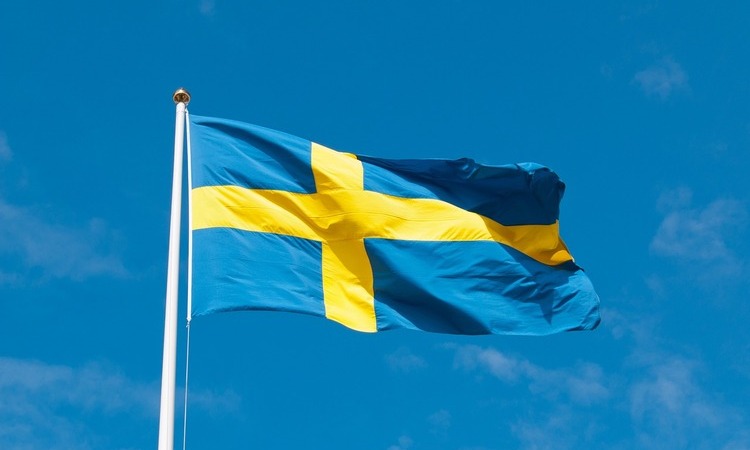
Sweden has introduced a new mining strategy to accelerate permits for rare earth elements and critical minerals.
Why rare earths matter
Rare earth elements are a group of 17 metals used in permanent magnets, electric vehicles, wind turbines, smartphones, medical equipment, and a wide range of advanced manufacturing technologies. Although they are relatively abundant in the Earth’s crust, economically viable deposits are less common, and processing capacity is concentrated in a small number of countries.
Sweden is already the European Union’s largest producer of iron ore and also holds deposits of graphite, cobalt, phosphate, and rare earth minerals. In 2023, state-owned mining company LKAB announced the discovery of the Per Geijer deposit near Kiruna, which is considered one of Europe’s largest known rare earth resources.
The Per Geijer deposit: Europe’s main reserve
The centerpiece of Sweden’s strategy is the Per Geijer deposit in northern Kiruna, operated by state-owned miner LKAB.
Reserve capacity: Holds an estimated 1.2 billion tons of total mineral resources, including roughly 2.2 million tons of rare earth oxides.
EU strategic status: Recognized as a flagship project under the EU’s Critical Raw Materials Act.
Support measures: The government plans to simplify land allocation for mining, set up a specialized environmental review body, and consider a state investment fund to support key projects.
Challenges ahead
While industry leaders welcomed the reform, analysts and local communities point out several ongoing hurdles:
Processing bottlenecks: Mining raw ore is only step one. Europe still lacks the advanced refining and magnet-making facilities that China dominates.
Indigenous land rights: The expansion overlaps with traditional grazing territories of the indigenous Sámi people, who warn that new mines risk cutting off vital reindeer migration corridors.
EU supply goals: The policy supports broader European Union goals to source at least 10% of its critical minerals domestically by 2030, though experts stress that building refineries will be just as crucial as speeding up mine permits.
Part of a wider European push
Sweden’s move comes as the European Union more broadly seeks to expand domestic mining, processing, and recycling capacity for critical raw materials under its Critical Raw Materials Act, aiming to reduce the bloc’s exposure to supply disruptions from any single country. Several Swedish mineral projects, including Per Geijer, have already received EU Strategic Project status, a designation intended to help fast-track financing and permitting at the European level.